KLIMAready Conference: Hamburg Companies on the Path to Climate Neutrality
Hamburg companies are setting out on the path to climate neutrality and can learn a great deal from one another. The KLIMAready Conference brought together people from business, academia, politics and public administration. The focus was on concrete experience, new approaches to solutions and the question of how climate action and competitiveness can be advanced together.
How can companies become climate-neutral while remaining competitive? The KLIMAready Conference on 15 October made one thing clear: many companies have already started. What matters now is sharing experience and moving forward faster together.
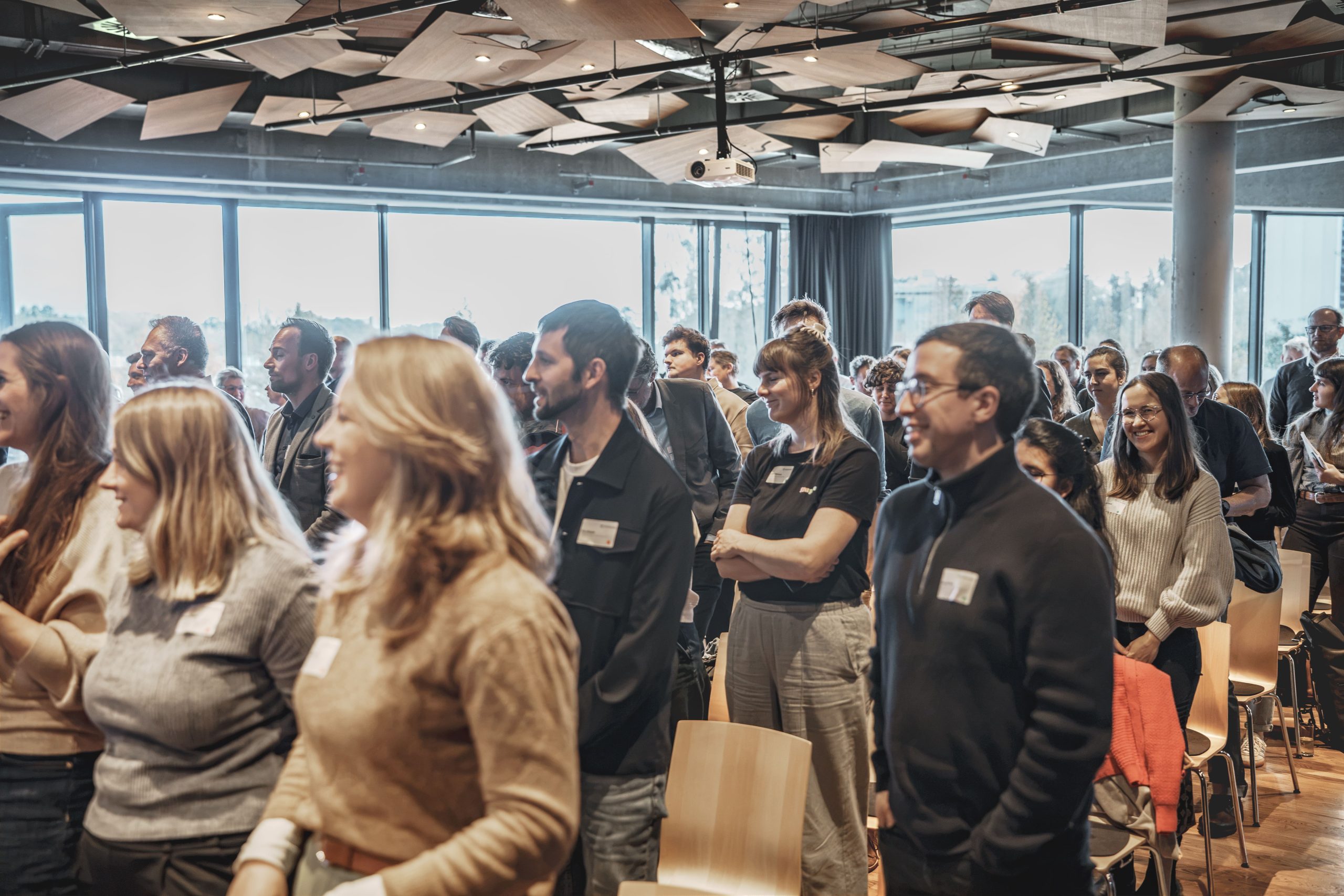
The atmosphere at Wälderhaus in Hamburg-Wilhelmsburg was optimistic. At the KLIMAready Conference, people from companies, academia, politics and public administration came together who do not merely want to discuss climate action, but to advance it in practical terms. One idea ran through the entire afternoon: we need more stories of success. Seeing what others have already achieved makes it easier to recognise what is possible within one’s own company.
The conference in the video
Climate action is an economic opportunity
The conference opened with welcoming remarks by Dr Benno Hain, Head of the Climate Neutrality Unit at Hamburg’s Ministry for the Environment, Climate, Energy and Agriculture. The unit coordinates the Hamburg Senate’s climate policy and supports the implementation of the city’s climate targets.
In the keynote that followed, Prof Hans Schäfers from Hamburg University of Applied Sciences (HAW Hamburg) and Head of CC4E focused on the economic dimension of the transformation. Drawing on a current KfW study, he illustrated the scale of investment required for Germany to achieve climate neutrality by 2045. According to the study, around six trillion euros will be required in total, although a substantial share of these investments would also be necessary without the transformation. Schäfers’ core message was that the scientific evidence has been available for years. The challenge now is to put existing knowledge into practice and accelerate implementation.
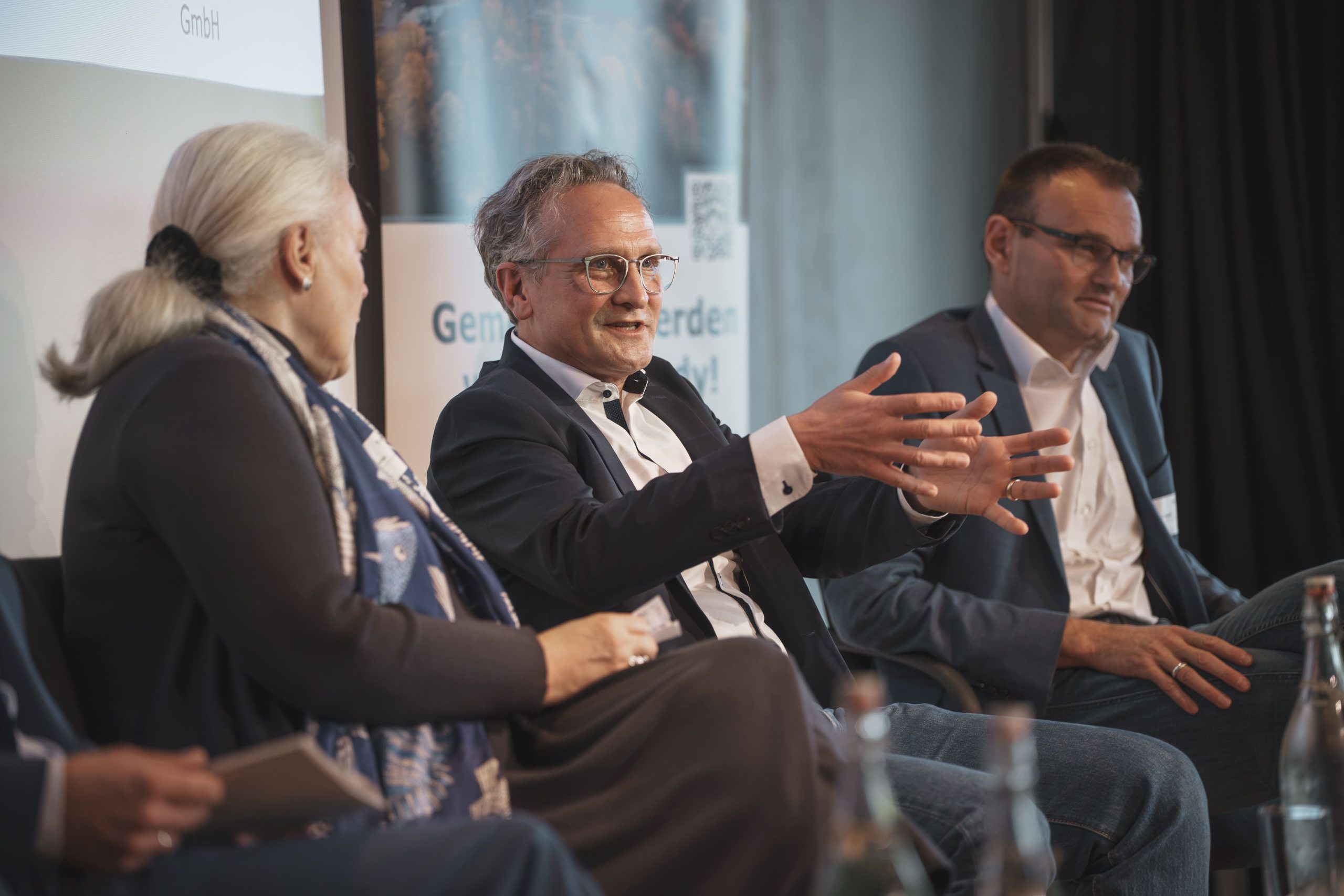
“If any location can do it, Hamburg can”
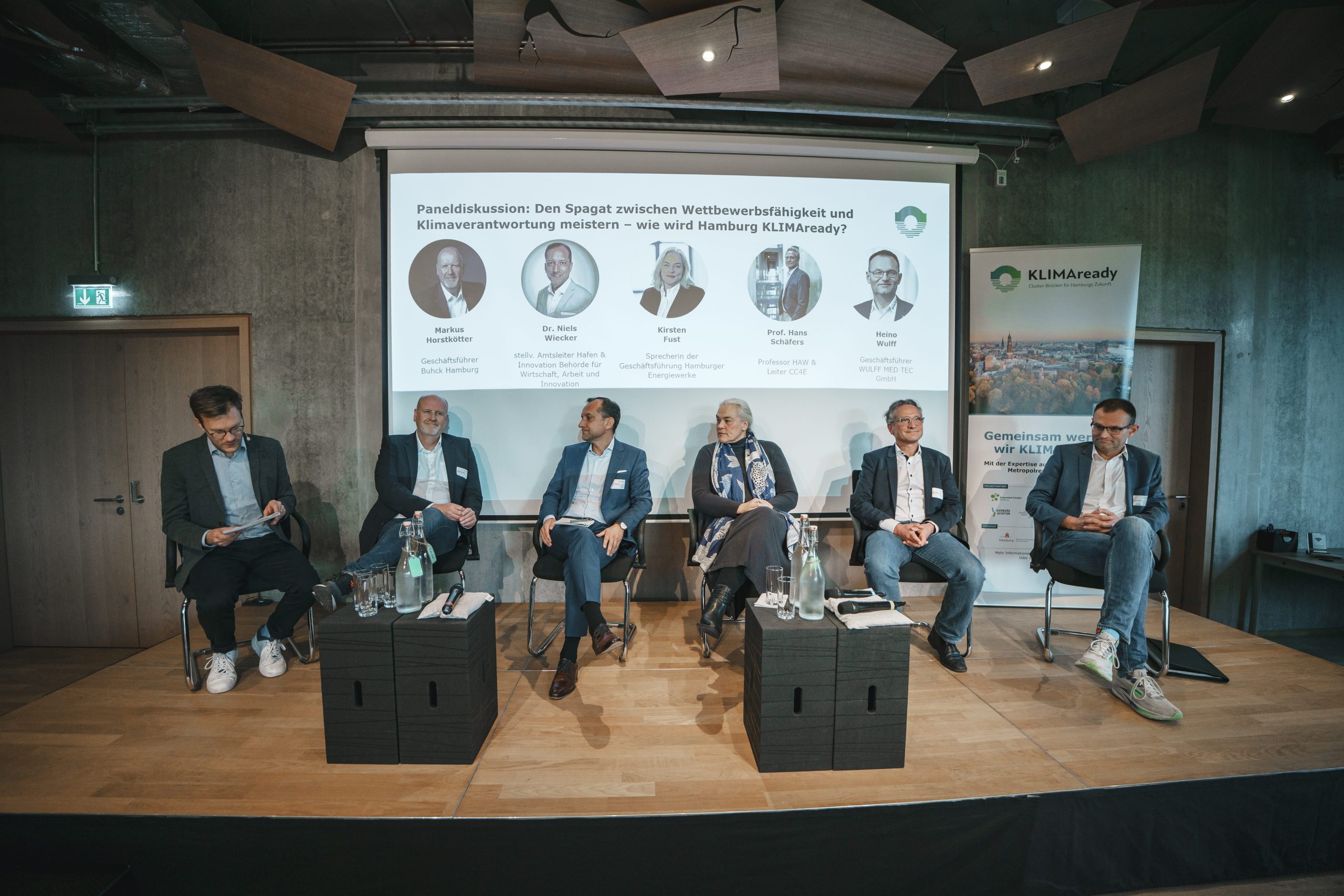
How companies and the city can drive the transformation forward was discussed by Kirsten Fust, Spokesperson for the Executive Board of Hamburger Energiewerke, Markus Horstkötter, Managing Director of Buhck Hamburg, Heino Wulff, Managing Director of WULFF MED TEC GmbH, Dr Niels Wiecker, Deputy Head of the Port and Innovation Department at Hamburg’s Ministry of Economy, Labour and Innovation, and Prof Hans Schäfers from HAW Hamburg. Falko Leukhardt, climate expert and owner of anderthalb° Beratung und Moderation, moderated both the panel discussion and the conference programme as a whole.
Examples from corporate practice demonstrated that the transformation is already well under way. The Buhck Group and WULFF MED TEC have implemented numerous measures and continue to develop them. These include the electrification of vehicle fleets, battery storage and wind power.
Optimism also prevailed when it came to Hamburg as a business location. Dr Niels Wiecker summed it up: “If any location can do it, Hamburg can.” Kirsten Fust also pointed to the visible changes taking place across the city. The many construction sites are evidence of a city in transition. Without construction sites, there can be no change and further development.
Prof Hans Schäfers explained how the transformation can be accelerated further, with a focus on digitalisation, artificial intelligence and intelligent energy management. These technologies create opportunities to optimise processes and save energy. This also requires openness to new solutions and a critical look at rules that may hold back meaningful innovation.
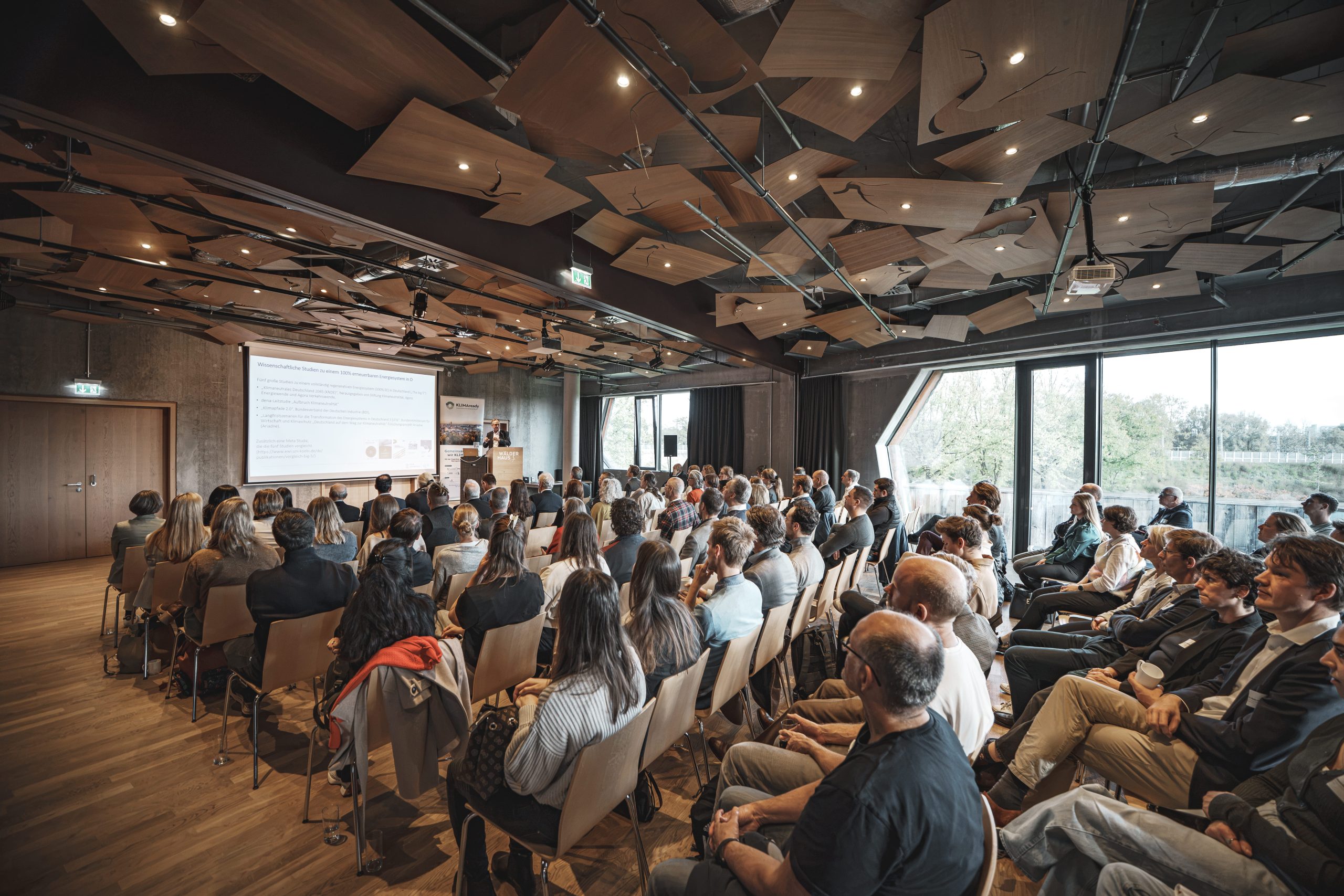
What companies can take away from the discussion
Asked by the moderator what a company could start doing tomorrow, the participants identified three concrete starting points: assess the current situation and analyse energy flows and savings potential at the site, seek exchange with neighbouring companies, and make use of free advisory and networking services.
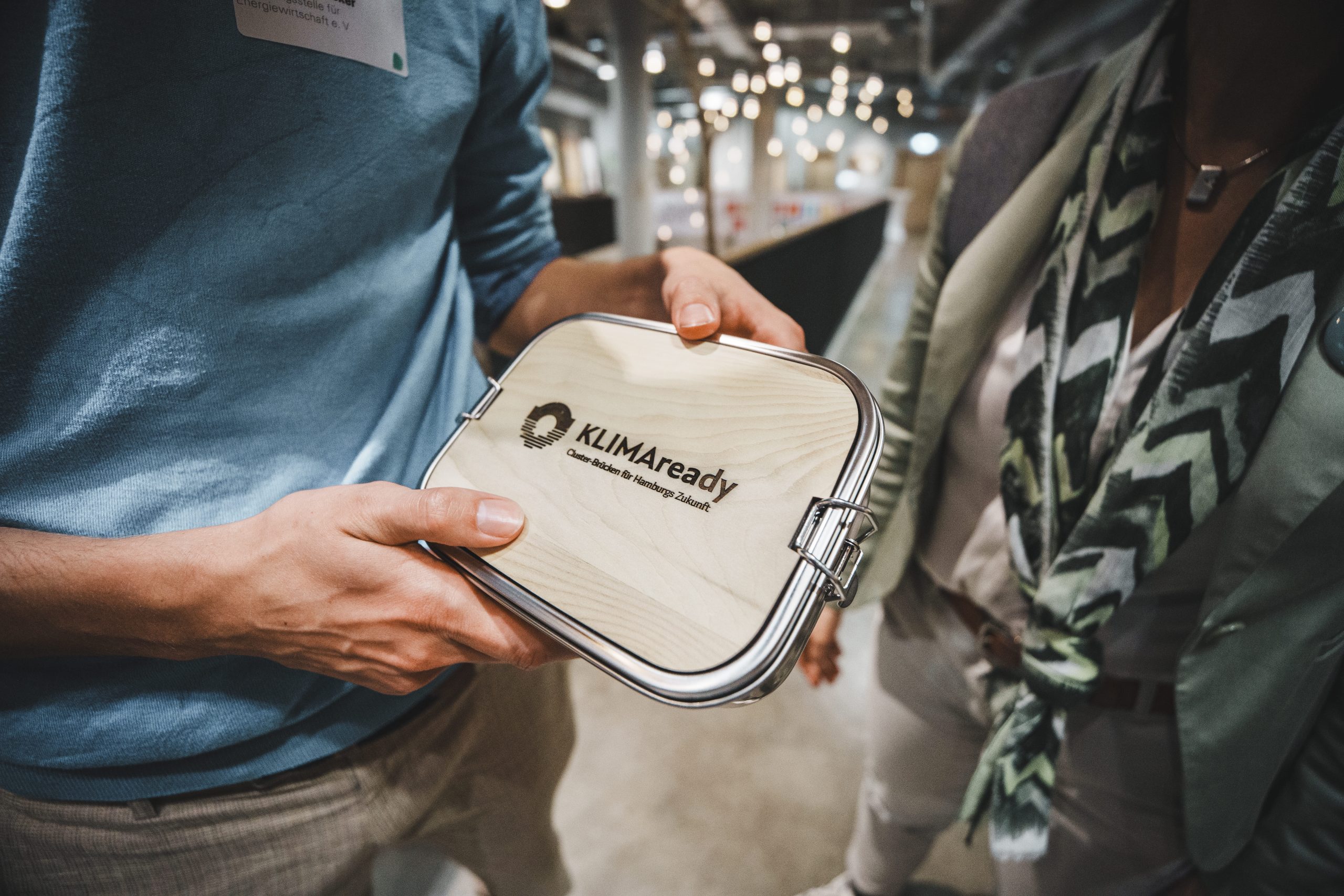
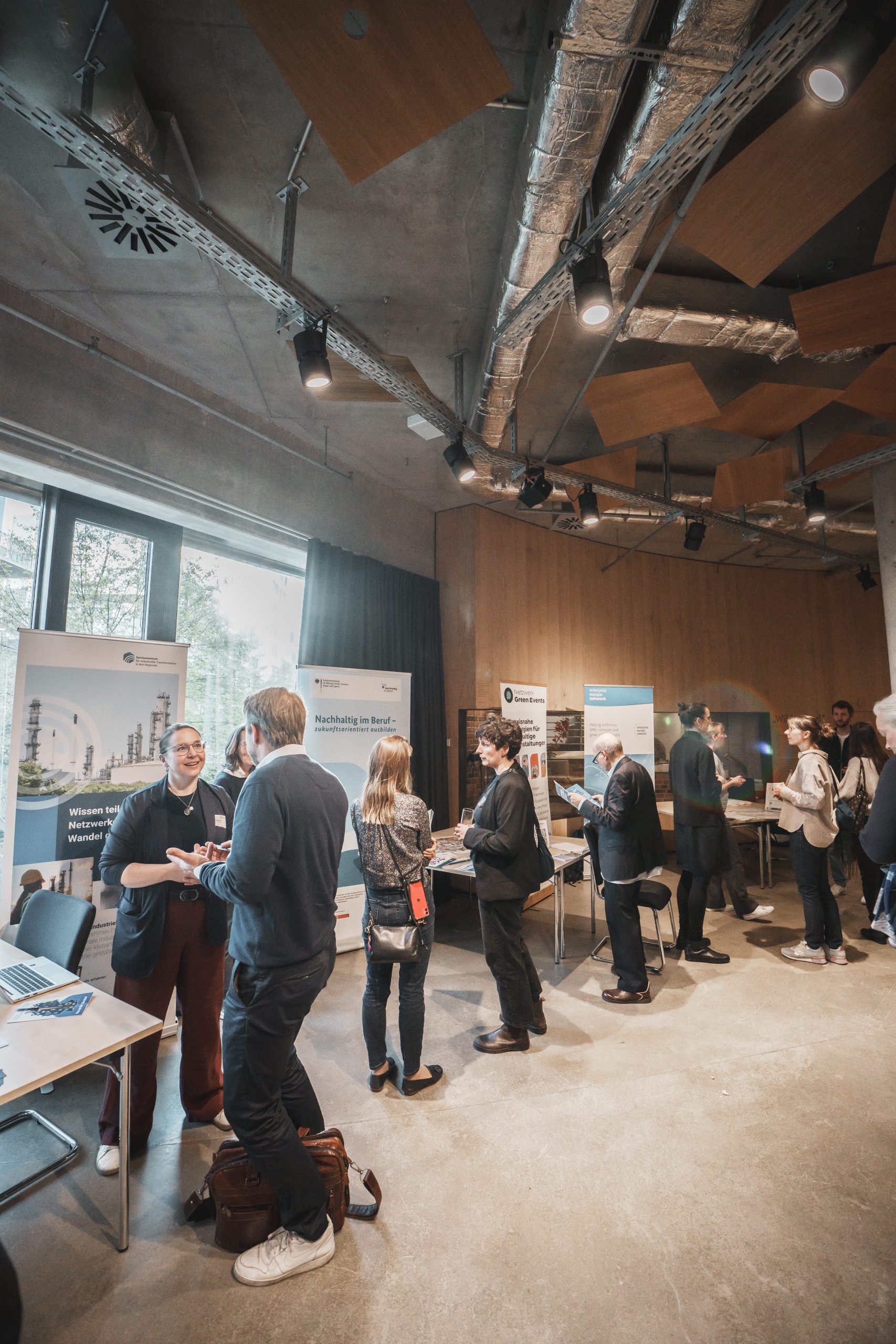
The KLIMAready Conference’s “Market of Opportunities” already provided a chance to get to know such services. The organisations on site to inform companies about their support services included the Federal Institute for Vocational Education and Training (BIBB), the Service Centre for Industrial Transformation in the Regions, the NAFIM Service Centre, BUKEA’s Heat Planning & Energy Infrastructure Expansion project, Umweltpartnerschaft, EnergieBauZentrum, the Competence Center for Energy Transition (CC4E), Enterprise Europe Network, and Hamburgische Investitions- und Förderbank (IFB).
The conference itself also received support in its organisation: with the help of the Green Events Network, a carbon footprint is being prepared for the event. The results will be published shortly on the KLIMAready website.
Three deep dives, three concrete topics
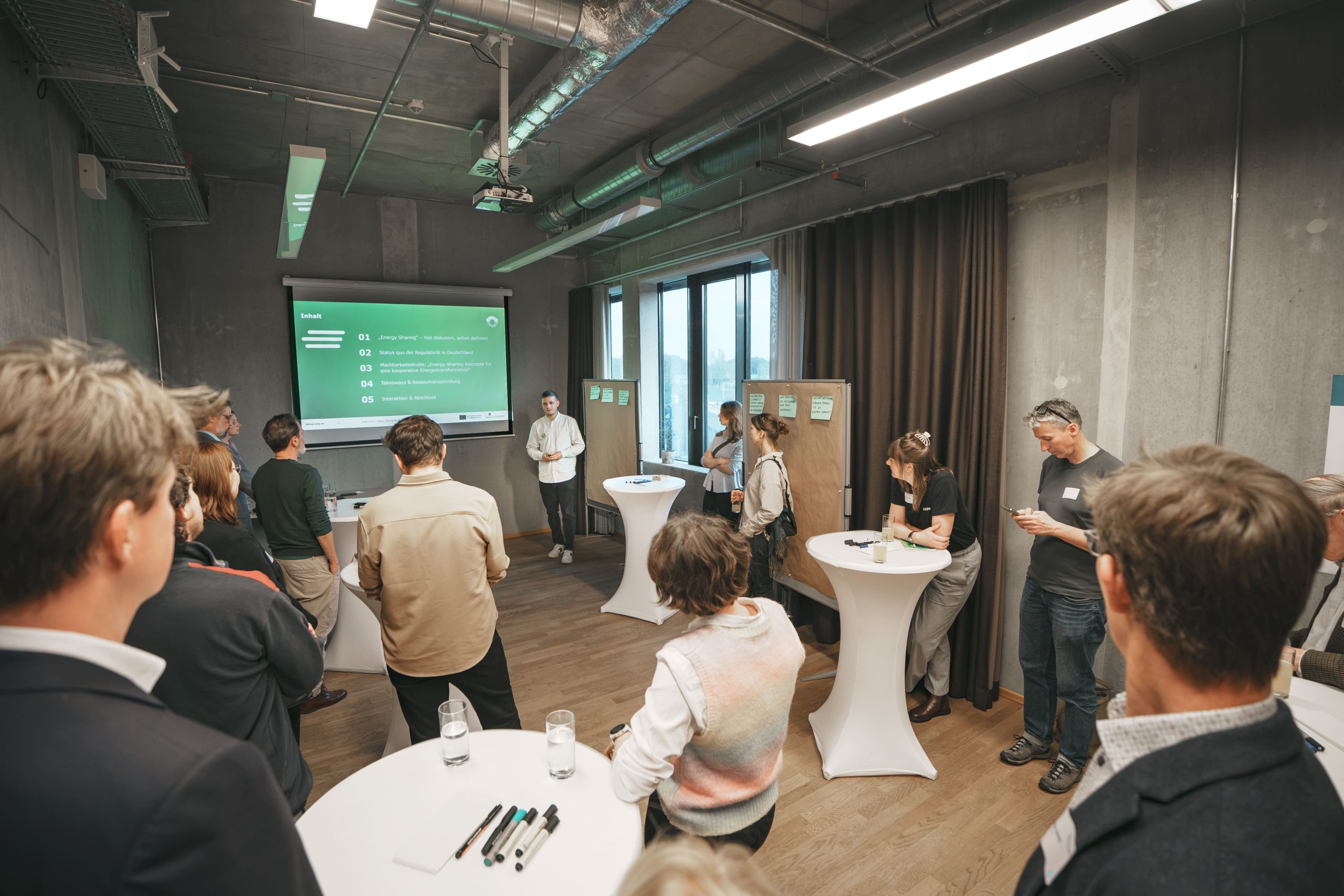
Alongside the overarching questions discussed on the panel, three deep dives provided an opportunity to explore individual topics in more depth and work together on possible solutions.
- Energy sharing for companies: The results of the recently published feasibility study formed the basis for discussing shared energy solutions. Interest in the topic is high, while many questions remain open.
- Charging infrastructure for electric trucks: Maximilian Hecker from the Research Center for Energy Economics (FfE) provided expert input on electrifying heavy-duty transport. Participants discussed challenges relating to fleet conversion, electricity procurement, grid connections and depot planning.
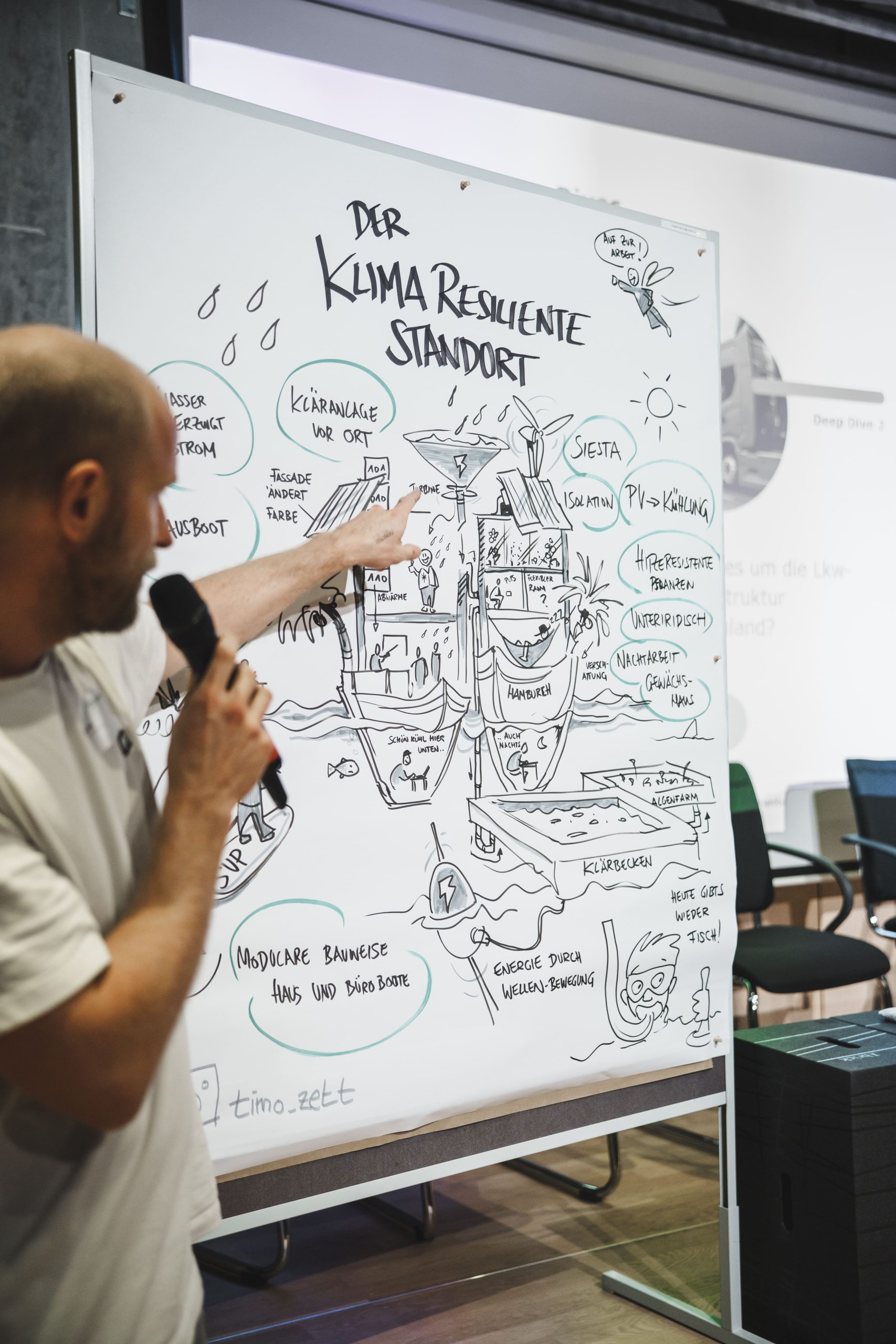
- Climate-resilient commercial areas: In the future lab, participants developed ideas for a commercial area that is as well prepared as possible for the consequences of climate change. A graphic recorder captured the ideas live. The format encouraged participants to think beyond familiar boundaries and develop new perspectives together.
Moving from knowledge to action together
The KLIMAready Conference demonstrated how much potential lies in exchange across industry boundaries. For the first time within the project, so many companies from different sectors and business areas came together to share experiences, learn from one another and discuss joint approaches to solutions.
KLIMAready enables this exchange through the cooperation of seven Hamburg clusters. They bring together knowledge and contacts from different industries and support companies in finding suitable approaches and partners for their next steps. The project is funded by the European Regional Development Fund and the City of Hamburg.
Find out more about KLIMAready: https://klimaready.de/
The KLIMAready project is funded by the European Regional Development Fund and the City of Hamburg.