Hamburg Sustainable Finance Summit 2026
How can capital be turned into real transformation? At the Hamburg Sustainable Finance Summit 2026, representatives from business, finance, academia and politics discussed financing solutions for a climate-neutral and resilient economy. Practical examples and perspectives from Hamburg showed how sustainable finance can unlock economic opportunities.
Context
How do we mobilise capital for a climate-neutral and resilient economy? This was the key question at the Hamburg Sustainable Finance Summit held at the Hamburg Chamber of Skilled Crafts on 5 October 2026. The event brought together representatives from the real economy, the financial sector, academia and politics to discuss financing solutions, business practice and the impact of sustainable investments.
Together with UmweltPartnerschaft Hamburg and the Sustainable Finance Research Group, FCH Finance City Hamburg GmbH hosted the summit. At its core was the question of how sustainable finance can enable concrete investments and support the transformation of companies, business models and infrastructure.
Sustainable finance between regulation and practice
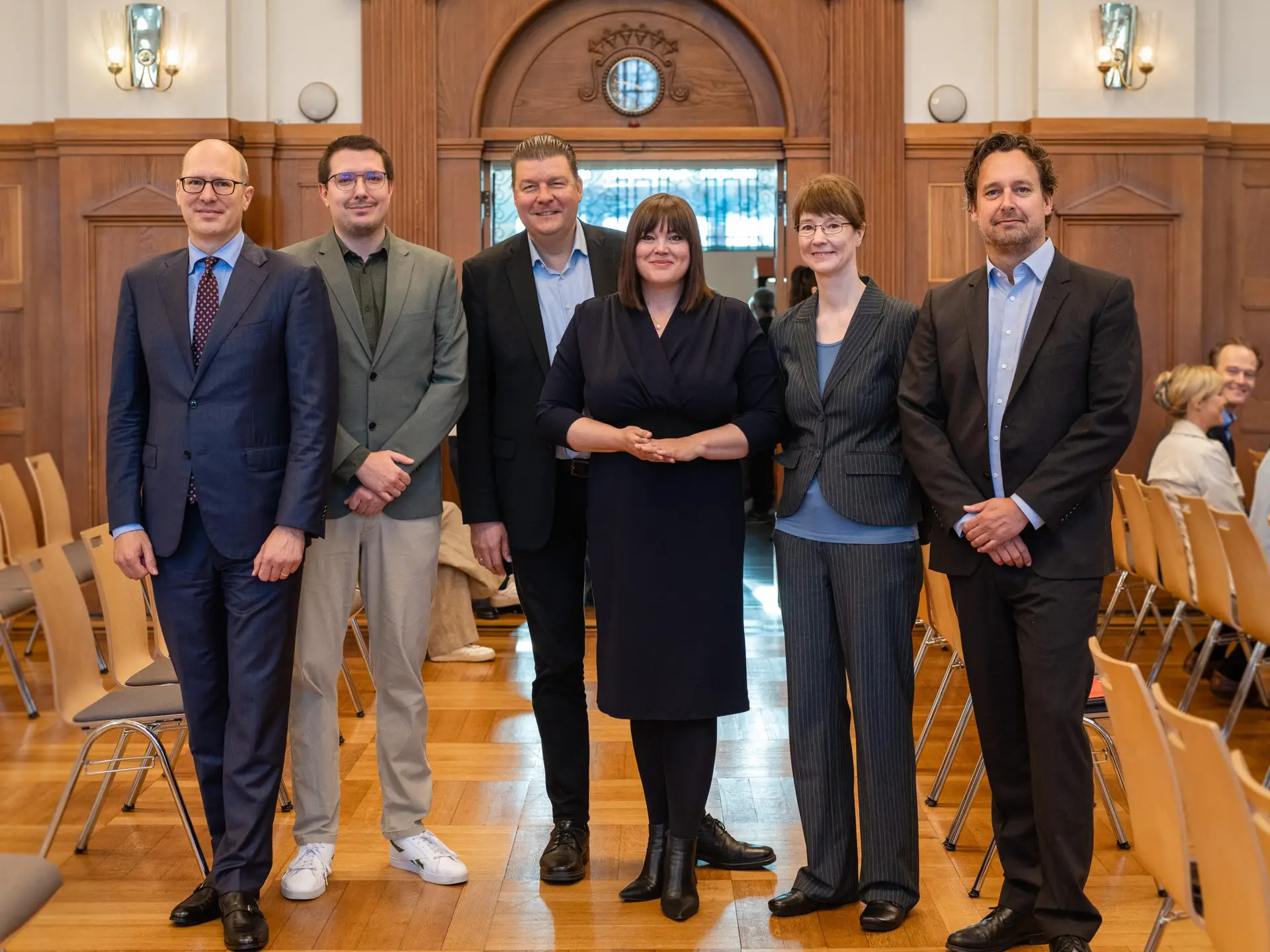
After the welcome by Dr Jennifer Kowallik from UmweltPartnerschaft Hamburg, Senator of Finance Dr Andreas Dressel and Second Mayor and Senator for the Environment Katharina Fegebank opened the event with their welcome remarks. Rupert Schaefer, Executive Director Strategy, Policy and Steering at the German Federal Financial Supervisory Authority, then presented BaFin’s sustainable finance strategy.
The subsequent panel discussion focused on the challenges and potential of permanently embedding sustainable finance. Moderated by Yvonne Zwick, Chair of BAUM e.V., the panel brought together Benjamin Köhler from Otto, Ellen Weiland from the NAFIM Service Centre at BAUM e.V., Tobias Zehnter from NORD/LB and Carmen Auer from BDO. This created a dialogue between perspectives from corporate practice, SME finance, banking and consulting.
Mobilising capital for transformation
Ambitious climate targets require financing solutions that match companies’ investment needs and transformation pathways. The following programme block demonstrated what such approaches can look like in Hamburg, using practical examples from energy supply, industry, buildings, mobility and innovation.
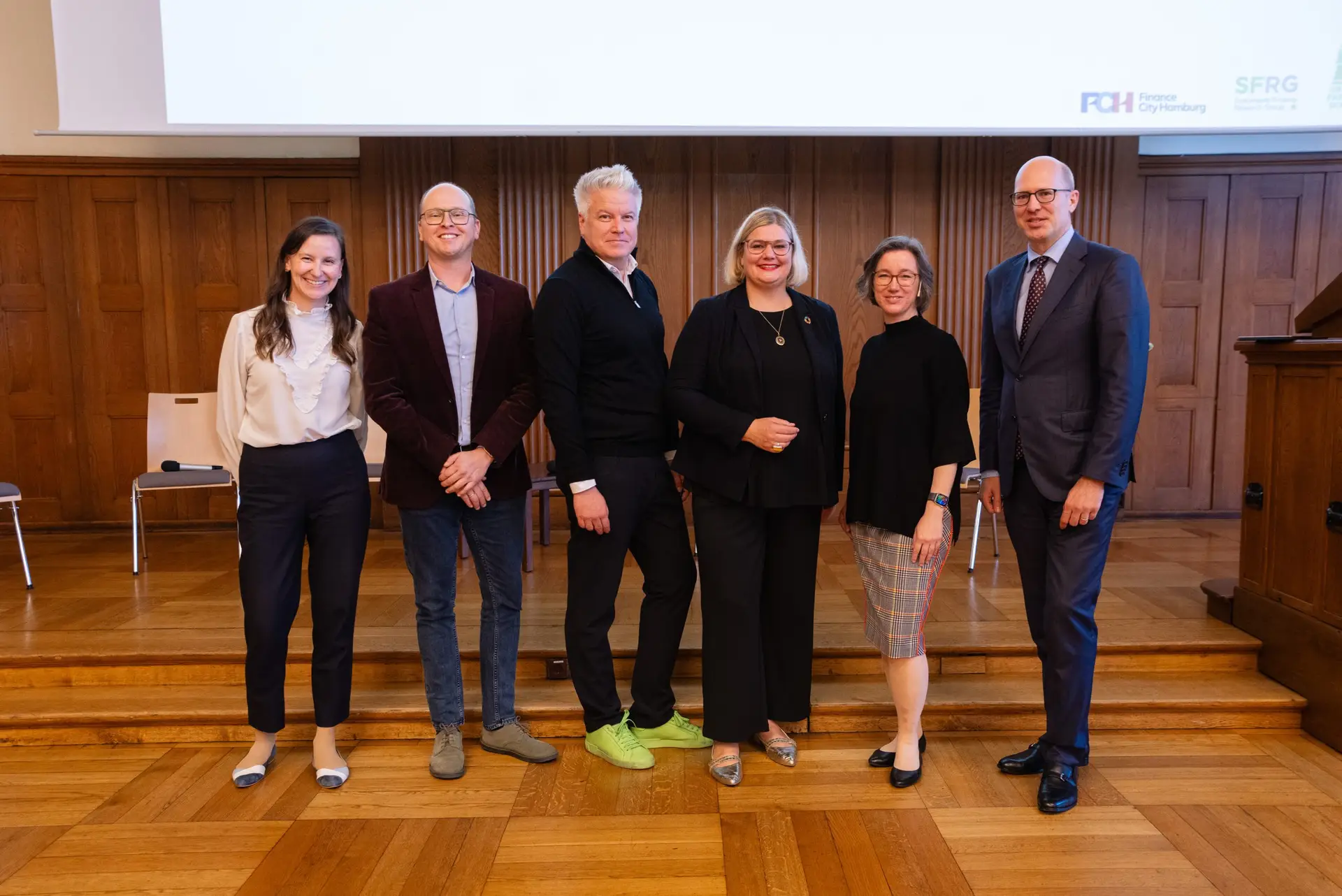
The contributions ranged from the green promissory note loan of Hamburger Energiewerke, presented by Chris Schmelter, to sustainable finance as a lever for sustainable supply chains, highlighted by Vedrana Lemor from Aurubis. Caroline Braus from Concular addressed ESG-based circular value creation in Hamburg’s construction sector, while Dr Christian Priemer presented Hamburger Hochbahn’s Green Finance Framework. Dr Miriam Putz from the Hamburg Chamber of Commerce also introduced the Zukunftsstiftung Hamburg as an approach to scaling sustainable companies in Hamburg.
These examples illustrated the broad spectrum of sustainable finance. In addition to investments in energy supply, buildings and mobility, it also includes the question of how innovative companies can gain access to growth capital. Sustainable finance must therefore both support established companies along their transformation paths and enable the further development of new solutions.
Strengthening future viability and resilience
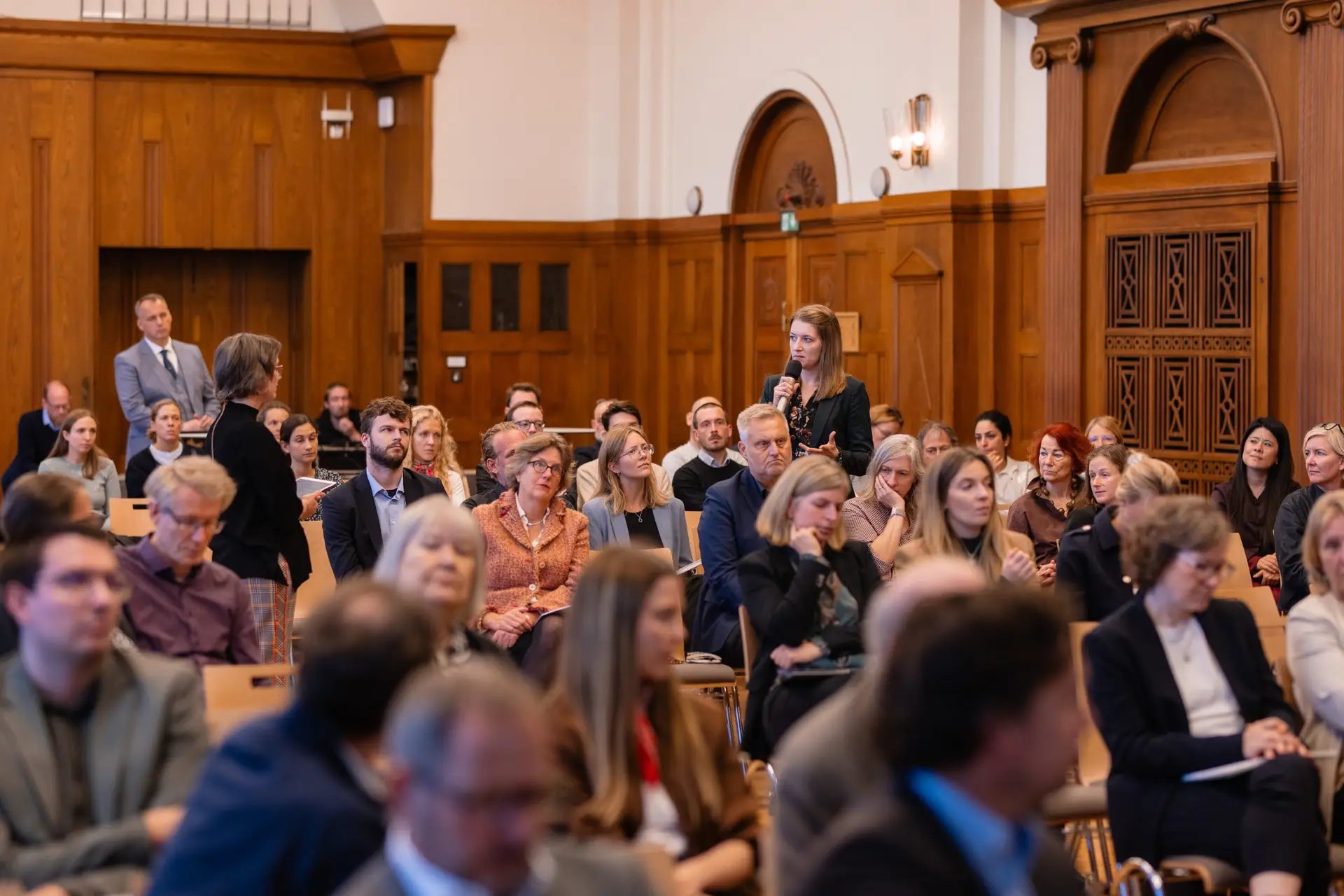
Another key focus was the link between sustainability, economic future viability and resilience. Climate risks do not only affect the environment; they also affect business locations, business models and financing decisions. As a result, data and transparency are becoming more important, extending beyond reporting alone to support concrete action.
For companies, this means identifying risks and making their development pathways understandable. Banks can use this information to assess risks and provide financing more effectively. Sustainable finance therefore connects the perspective of capital providers with the investment needs of the real economy.
Putting the impact of sustainable investments centre stage
In the afternoon, the focus shifted to the scientific classification of and the impact of sustainable finance. Prof Dr Timo Busch from the University of Hamburg and the Sustainable Finance Research Group highlighted historical findings and current developments regarding the relationship between ESG, impact and financial performance. Jürgen Kern, Chief Sustainability Officer at KfW, complemented this academic perspective with a keynote on impact and impact measurement from the banking sector.
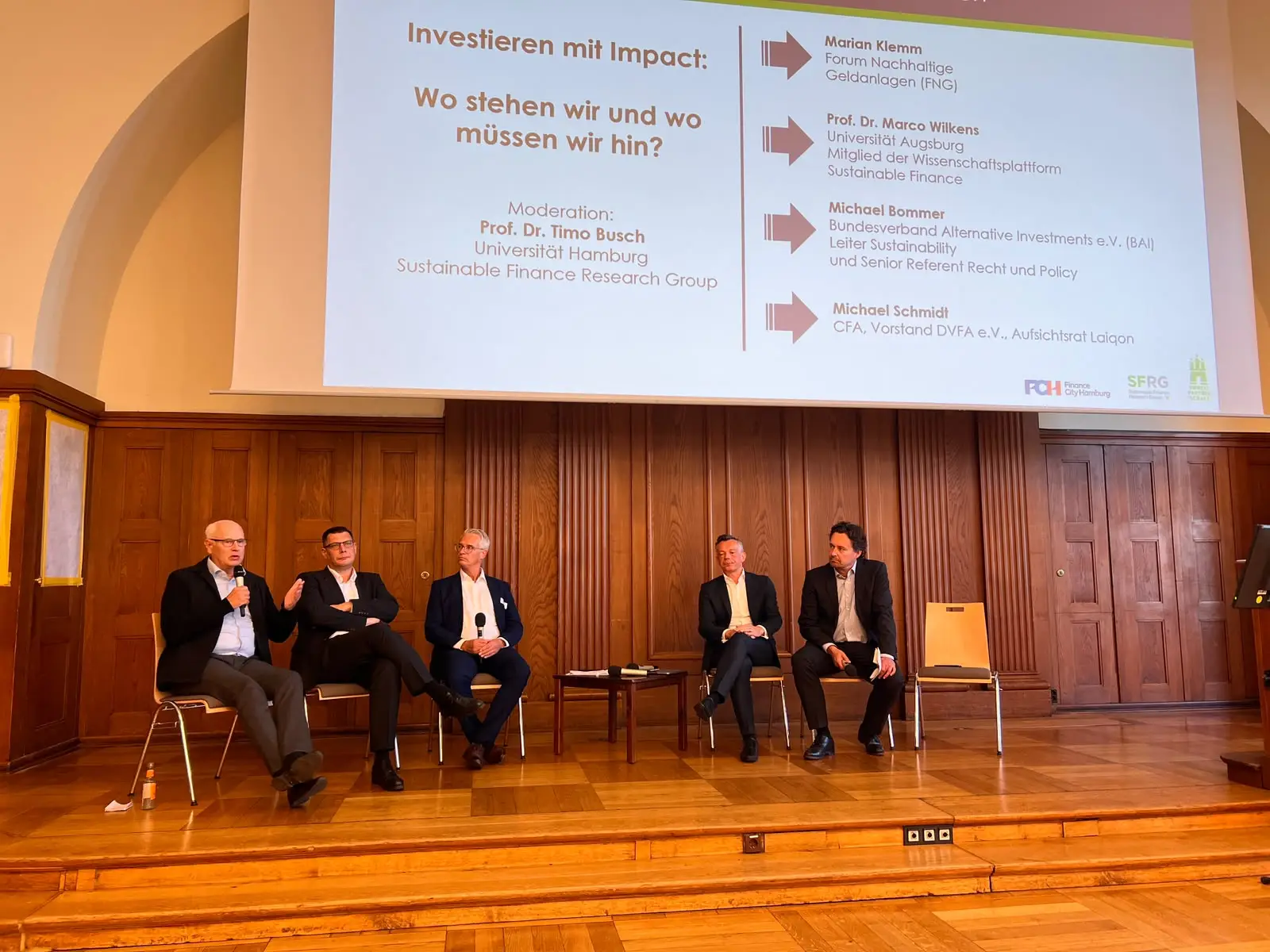
Under the title “Investing with impact: where do we stand and where do we need to go?”, short impulses and a panel discussion followed. Moderated by Timo Busch, the discussion featured Marian Klemm from Forum Nachhaltige Geldanlagen, Prof Dr Marco Wilkens from the University of Augsburg, Michael Bommer from the Bundesverband Alternative Investments and Michael Schmidt from DVFA.
This programme block brought together academic and practical perspectives on sustainable investing. At its core was the question of how capital can enable positive change and support the transformation of the economy.
Making opportunities and economic potential visible
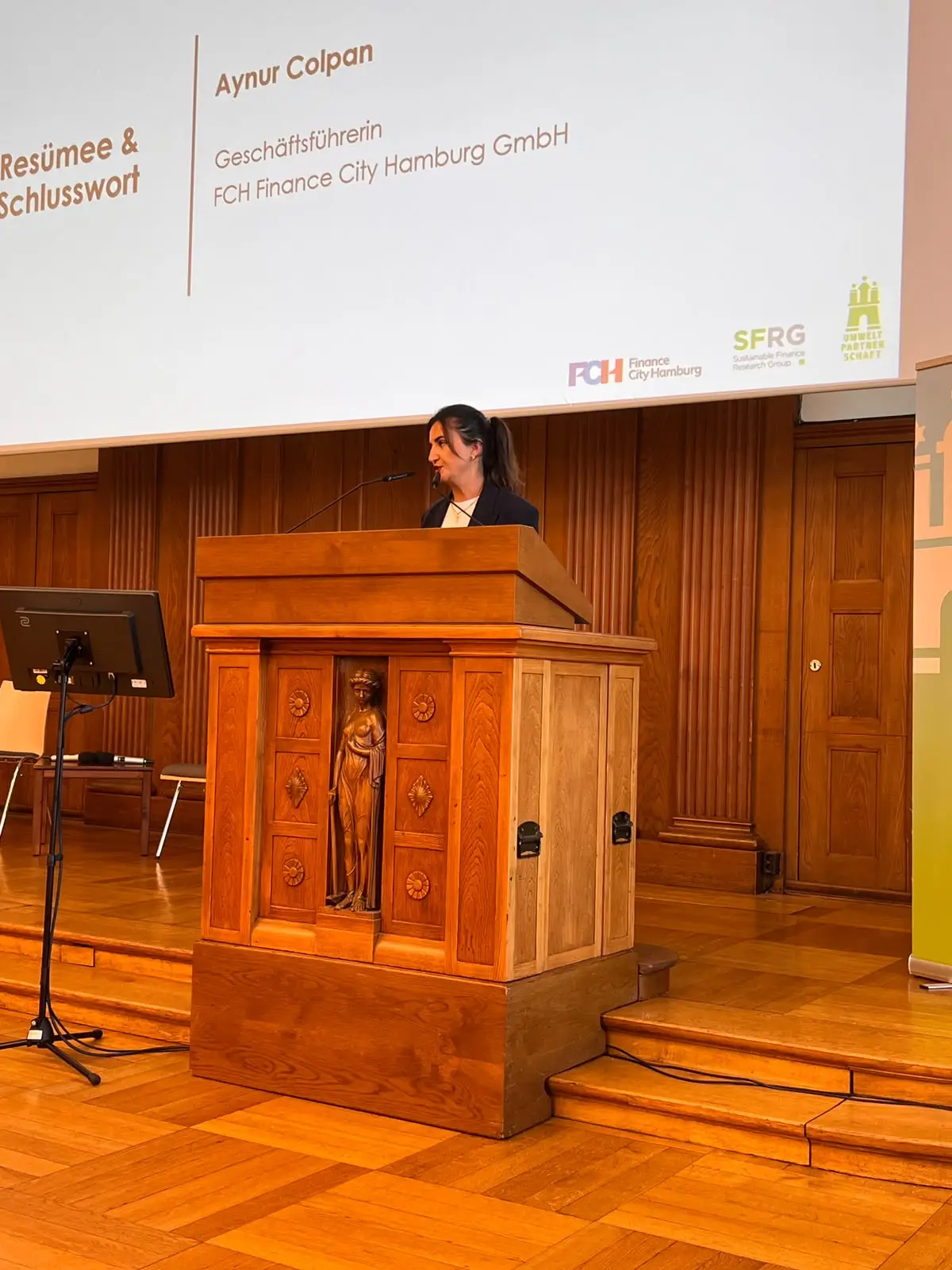
In conclusion, Aynur Colpan, Managing Director of FCH Finance City Hamburg GmbH, summarised the day. The summit offered a wide range of impulses for connecting sustainability goals with entrepreneurial practice and suitable financing solutions.
One thing also became clear: sustainable finance needs a convincing narrative. Opportunities and economic potential must move further into the foreground without obscuring risks and requirements. In this way, transformation becomes visible not only as a challenge but also as an investment in innovation, competitiveness and future viability.
We would like to thank our partners, UmweltPartnerschaft Hamburg and the Sustainable Finance Research Group, as well as all contributors and participants for their committed exchange. We are already looking forward to the Hamburg Sustainable Finance Summit 2027!